

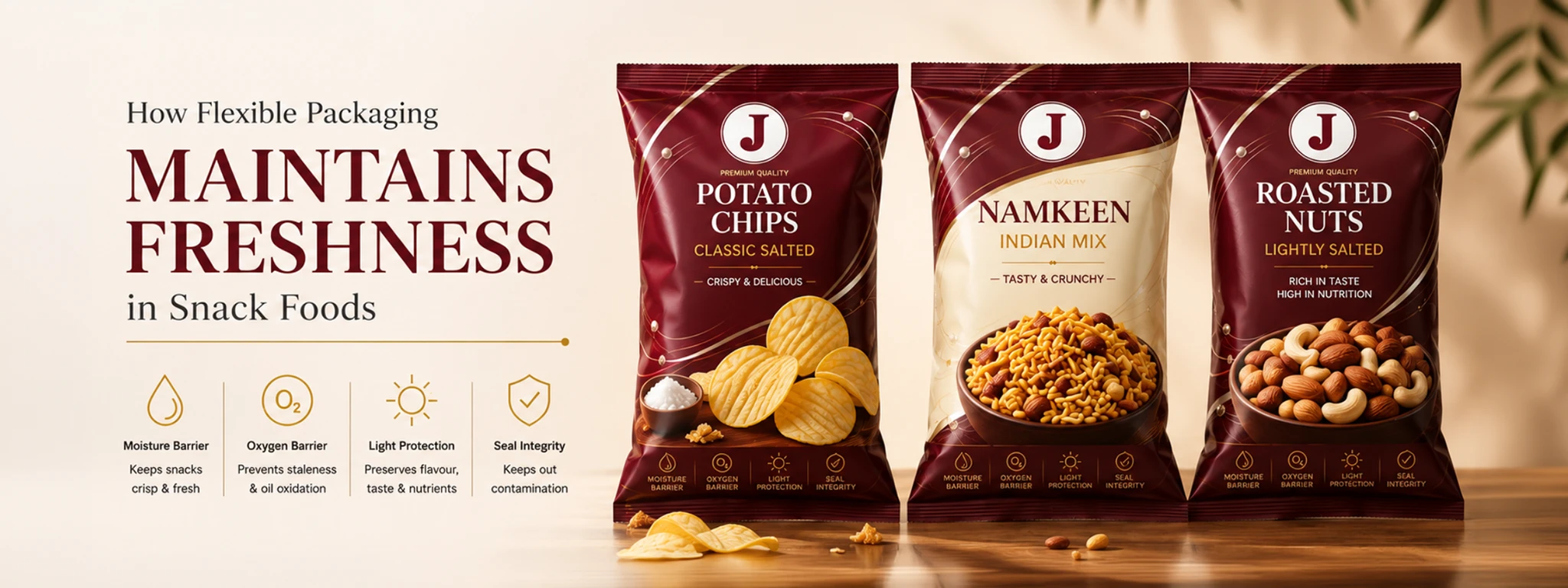
Imagine opening your favourite packet of chips only to find them soft instead of crispy, or tasting nuts that have lost their crunch and flavour. It takes just one disappointing bite for consumers to lose confidence in a brand. In the highly competitive snack food industry, freshness isn’t just a quality benchmark, it’s a key factor that keeps customers coming back.
Behind every perfectly crisp chip, crunchy namkeen, flavour-packed biscuit, or roasted snack is a packaging solution working silently to protect it from moisture, oxygen, light, and contamination. Without the right packaging, even the highest-quality snacks can lose their taste, texture, and aroma long before they reach consumers.
This is where flexible packaging makes all the difference. Designed to preserve freshness, extend shelf life, and maintain product quality, it has become the preferred choice for snack food manufacturers. As one of India’s leading flexible packaging manufacturers, Jupiter Laminators delivers innovative, high-barrier packaging solutions that help brands keep every snack as fresh and delicious as the day it was packed.
Why Freshness Matters in Snack Foods
Consumers judge a snack within seconds of opening the package. A stale chip, soft cracker, or soggy namkeen can instantly damage a brand’s reputation.
Snack food manufacturers face several challenges in preserving freshness:
- Moisture absorption
- Oxygen exposure
- Loss of aroma and flavour
- Oil oxidation
- Light exposure
- Contamination during storage and transportation
Without effective packaging, even premium-quality snacks can lose their texture, taste, and nutritional value long before reaching consumers.
The Science Behind Flexible Packaging
Flexible packaging is engineered using multiple layers of specialized materials, each performing a unique function. Together, these layers create a powerful barrier against external elements that can compromise food quality.
Unlike traditional packaging, flexible packaging is lightweight, durable, and highly customizable while delivering superior product protection.
For snack foods, these multilayer structures help preserve crispness, maintain flavour, and significantly extend shelf life. Jupiter Laminators develops customized barrier packaging solutions for a wide variety of food and snack products, ensuring every package matches the specific needs of the product inside.
1. Moisture Barrier Keeps Snacks Crispy
Moisture is one of the biggest enemies of crunchy snacks.
Products such as:
- Potato chips
- Namkeen
- Wafers
- Crackers
- Roasted snacks
quickly lose their crisp texture when exposed to humidity.
High-performance flexible packaging incorporates moisture-resistant films that prevent water vapour from entering the pack. This helps maintain the desired crunch throughout the product’s shelf life.
For consumers, that means every bite tastes as fresh as intended.
2. Oxygen Barrier Prevents Staleness
Oxygen triggers oxidation, one of the primary causes of food deterioration.
When oxygen enters the package, it can:
- Cause oils to become rancid
- Alter flavours
- Reduce nutritional quality
- Shorten shelf life
High-barrier flexible packaging significantly limits oxygen transmission, allowing snacks to remain fresher for longer without compromising quality.
This is especially important for products containing edible oils, nuts, seeds, and baked ingredients.
3. Aroma Retention Preserves Taste
The aroma of freshly packed snacks is an essential part of the eating experience.
Seasonings, spices, herbs, and flavour coatings gradually dissipate when packaging lacks proper barrier protection.
Advanced laminate structures help retain these volatile compounds inside the package, ensuring consumers enjoy the intended flavour profile every time they open it.
4. Protection Against Light
Exposure to sunlight and artificial lighting can negatively affect many packaged foods.
Light accelerates oxidation and can:
- Fade product appearance
- Degrade nutrients
- Affect flavour stability
Specialized flexible packaging films provide excellent light protection, making them ideal for sensitive snack products.
5. Strong Seal Integrity Prevents Contamination
Freshness is only maintained when the package remains completely sealed.
Modern flexible packaging offers:
- Excellent seal strength
- Leak resistance
- Tamper evidence
- High puncture resistance
This prevents external contamination while protecting products during transportation, warehousing, and retail handling.
For manufacturers shipping products across long distances, reliable sealing is critical.
6. Extended Shelf Life Reduces Food Waste
Longer shelf life benefits everyone in the supply chain.
For manufacturers, it means:
- Wider distribution reach
- Lower product returns
- Better inventory management
For retailers:
- Longer display periods
- Reduced wastage
- Improved profitability
For consumers:
- Fresher products
- Greater convenience
- Better value for money
Flexible packaging helps achieve all these advantages without compromising product quality.
7. Lightweight Yet Highly Protective
Rigid packaging often requires more material while offering limited flexibility.
Flexible packaging provides superior protection with significantly less material.
Its lightweight nature also offers several operational benefits:
- Lower transportation costs
- Improved storage efficiency
- Reduced carbon footprint
- Easier handling across the supply chain
These advantages make flexible packaging an economical and environmentally conscious choice for snack manufacturers.
Common Materials Used in Snack Food Flexible Packaging
No single material can provide every property required for snack packaging. That is why flexible packaging is typically made using multilayer laminate structures that combine different films, with each layer performing a specific function.
Some of the most widely used materials include:
- BOPP (Biaxially Oriented Polypropylene): Widely used for snacks such as chips, namkeen, biscuits, and confectionery, BOPP offers excellent moisture resistance, high clarity, strong printability, and good sealability. It helps maintain crispness while enhancing shelf appeal.
- PET (Polyethylene Terephthalate): PET provides excellent mechanical strength, dimensional stability, and heat resistance. It serves as the outer layer of many snack packaging structures, offering superior print quality and additional protection against oxygen and external handling.
- PE (Polyethylene): PE is commonly used as the inner sealing layer because of its excellent heat-sealing properties and flexibility. It creates a strong, leak-proof seal that protects snacks from moisture and contamination during storage and transportation.
By combining materials such as BOPP, PET, and PE, packaging manufacturers can create customised high-barrier laminate structures that preserve freshness, extend shelf life, and ensure snacks reach consumers with their original taste, texture, and aroma intact.
Custom Packaging for Every Snack Category
Every snack product has unique packaging requirements.
For example:
- Potato chips require exceptional oxygen barriers.
- Namkeen needs moisture protection.
- Dry fruits demand both oxygen and light barriers.
- Biscuits require excellent seal integrity.
- Granola and cereals benefit from aroma retention.
Jupiter Laminators works closely with food manufacturers to develop tailor-made packaging structures that meet the specific functional requirements of each product category. Its dedicated R&D team recommends the most suitable packaging solutions based on the product’s composition, shelf-life expectations, and distribution requirements.
Sustainable Packaging Without Compromising Freshness
Today’s consumers are increasingly conscious of environmental impact.
The packaging industry is responding by developing innovative solutions that combine product protection with sustainability.
Modern flexible packaging:
- Uses less material than rigid packaging
- Reduces transportation emissions
- Optimizes storage space
- Supports ongoing advancements in recyclable and resource-efficient packaging
Jupiter Laminators integrates sustainability into its manufacturing processes while continuing to deliver high-performance packaging that protects products and supports evolving environmental goals.
Partnering with Leading Snack Brands
Selecting the right packaging partner is just as important as selecting the right packaging material.
Jupiter Laminators has earned the trust of leading food and FMCG brands by offering:
- Over 20 years of packaging expertise
- Customized flexible packaging solutions
- Advanced printing and lamination technologies
- High-quality raw materials
- Innovative barrier packaging
- Reliable manufacturing capabilities
- Consistent product quality
- Sustainable packaging practices
- Timely delivery and customer-focused service
The company serves a wide range of industries, including food & snacks, beverages, frozen foods, healthcare, home care, pet care, and many others, delivering packaging solutions that combine protection, visual appeal, and functionality.
Conclusion
Freshness is one of the most important factors influencing consumer satisfaction in the snack food industry. Even the finest ingredients can lose their appeal without packaging that effectively protects against moisture, oxygen, light, and contamination.
Flexible packaging has transformed the way snack foods are preserved, enabling brands to deliver products that remain crisp, flavourful, and safe throughout their shelf life.
With decades of expertise, cutting-edge technology, and a commitment to innovation and sustainability, Jupiter Laminators continues to help food manufacturers create packaging solutions that not only safeguard freshness but also strengthen brand value. Whether you’re packaging chips, biscuits, namkeen, cereals, confectionery, or other snack products, Jupiter Laminators provides reliable, high-performance flexible packaging solutions tailored to your business needs.